Old Lang's Signs
On Fritz Lang's Spiders and Dr. Mabuse The Gambler

Thank you, subscribers, for your support and for reading my first self-published work, dedicated to a pair of silent Fritz Lang films and their connection to serials and Louis Feuillade. This essay is coming to all subscribers for free, but I want to reiterate that this will not be the norm in the future, so if you find this essay informative or enjoyable, please consider pledging support. Please also share this with anyone who you think might be interested, and do not hesitate to leave feedback in the comments or to email me directly.
It is not uncommon to see critics refer to Louis Feuillade’s influence on Fritz Lang1, but I can find no record of Lang acknowledging Feuillade, and no less an authority on Lang than Tom Gunning considers it erroneous. Lang’s chief influence is not Feuillade specifically or even serials generally, he contends, but the detective film, which had been a massive success for Eclair, Pathé, and Eclipse even before Fantomas and Les Vampires. Denmark provided a series of Sherlock Holmes films to Germany, and Germany then made their own crime series and features. Note the word “series” rather than “serial”: these were often feature-length films with shared characters lacking narrative continuity, not one- and two-reel installments in a longer narrative.
This distinction is evident enough in Spiders, Lang’s oldest extant film and first crime film, which now frequently circulates2 as a single feature running nearly three hours but was made as two separate features a year apart (with more planned but never made). The first part involves an adventurer and an eponymous band of criminals looking for treasures in an Incan civilization after a message in a bottle washes ashore and alerts them to the possibility. The leader of that band is Ressel Orla’s Lio Sha, who certainly resembles the Irma Vep that Musidora embodied for Feuillade’s Les Vampires, but Theda Bara had already popularized the “vamp” persona in America, and the Japanese moga (“modern girl”) would follow on screen in another year or two, so one should be careful in attributing sociological trends to artistic influence. At any rate, the second part sees the same parties pursuing a diamond-crusted crown with special powers, and although it begins with a reminder of the first part’s conclusion, that’s virtually the last we hear of it. Like the detective series but unlike the serials, we have feature length films with discontinuous narratives but shared characters.
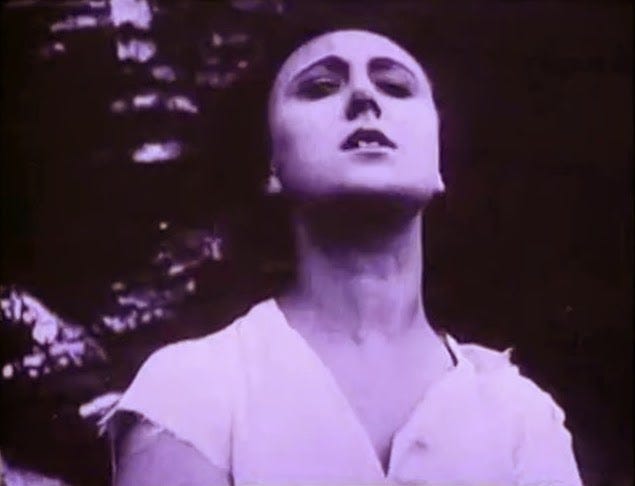
Spiders is not a great film, but it is an important precursor to both Dr. Mabuse the Gambler and Spies, and it demonstrates that Lang possessed from the beginning significant distinctions from Feuillade. Chief among these is his penchant for the insert: the action sequences of Spiders play out not in long takes or in one shot per set, but instead with frequent cutaways to either direct our eye or tell us what is about to come. Les Vampires also makes frequent use of dramatic irony, but Lang, unlike Feuillade before him (but like Hitchcock after him), is using his camera to reveal rather than conceal information. In Part 2, Lang cuts from a master shot of a hotel lobby to a medium shot of a table in the lobby where two criminals hand off stolen diamonds to their ringleader—one can imagine the same shot in Feuillade showing the action in the master shot. In Lang, nobody pops out of a door and snatches a character as they walk by or suddenly lassos a character out of a window, but that kind of surprise is Feuillade’s bread and butter.
Dave Kehr writes that with Spiders, Lang had the form but not yet the meaning, and certainly it would be hard to argue that Dr. Mabuse the Gambler, Lang’s next crime film, is not thematically richer than Spiders. Mabuse was adapted by Thea Van Harbou from the popular Norbert Jacques novels about the same character, and Van Harbou, who had worked with Lang previously, left husband Rudolf Klein-Rogge, who plays the title role, for Lang during the filming. She would then leave Lang for the Nazi Party when he was fleeing to America, and this fact, alongside contemporaneous reviews by Nazi periodicals, have spurred claims that Mabuse is an antisemitic film. One Nazi critic described Mabuse as a “quintessential Jewish figure” aiming for “mastery of the world,” and even his descent into madness is read as an excuse for non-punishment that is “typical case of the Jewish criminal.”3 But Mabuse does not have stereotypically “Jewish” characteristics, and manipulative banker-murderer-criminals are seen by most of us as villainous rather than Jewish. Mabuse more accurately—and more generically, but Lang would turn genericism into a virtue with Spies4—stands for all the contemporaneous ills of Germany. His gambling exploits and murder represent the crime and lack of morality tearing through the nation5. Even Mabuse’s counterfeiting, his creation of “worthless” money, echoed the hyperinflation shocking the Weimar at the time. His manipulation of the stock market provides comfort that someone or something is to blame, but it takes a Nazi to conclude that the person responsible for society’s ills must be Jewish. More convincing is Gunning’s analysis of Mabuse as one of Lang’s many “Grand Enunciators,” a man who is in control of the technological shifts that characterize modernity, one who uses previously unavailable means to compress time and space to his own ends. But just as important is that Mabuse is far more stylistically complex than Spiders6, and it is from that style that Mabuse derives its meaning.
Like Spiders, Dr. Mabuse pits an enterprising detective figure against a criminal mastermind, and it too is split into two parts (released a mere month apart rather than a year apart, but narratively continuous), each of which is further split into a half-dozen acts. It’s in this segmenting of the narrative that one can most see the potential influence of serials rather than simply detective films, and perhaps even of Feuillade: most of these segments end with a revelation or conclusion of a plot line rather than a cliffhanger, a device abundant in serials, especially American serials, but eschewed by Feuillade. Side plots and side characters pile up early, with early introductions giving way to sudden prominence (as with the Count and Countess Lund), an occasional occurrence in serials in response to unforeseen circumstances during production.7 Mabuse even cheats in four separate card games in the longer first part, as if wanting to ensure that audience members who missed an “episode” are in the loop. Indeed, it is not uncommon for a new act to begin as if it needs to give the audience a recap.
The most interesting such “recap” occurs in Part 2, when one act ends with a shot of a note and the next begins with another shot of the same note. Lang does this often—in Four Around a Woman, in Spiders, in the later Spies, and at other points in Dr. Mabuse, most remarkably when a lengthy note explaining the logic behind the stock market manipulation depicted in the opening heist is shown twice in very quick succession. It’s a frustrating tendency, especially given that Lang tolerates long title cards more than most directors and allows each message a full allotment of screen time on each revisit. That said, I’m not convinced this is a superfluous tendency; it functions as an early but clumsy instance of asserting mastery over communication and media.
To return briefly to the opening of Spiders, a man writes down that there is treasure on the Incan island where he has been stranded, but by the time the protagonist receives it, he hardly cares who sent it, only if the treasure is real. In Spies, the origin of various messages confuses or deceives multiple characters, while Scarlet Street is premised on a question of authorship over a number of paintings. The Big Heat begins with a suicide note that we soon learn may be forged, and in M, a leitmotif signals to viewers the presence of the criminal, who is apprehended because another character is able to connect the presence of whistling to a past abduction—in other words, when he is able to connect sound to source, an animating concern in the next year’s The Testament of Dr. Mabuse as well. In both his silent and his sound features, his German films and his American ones, Lang’s primary preoccupation is communication. The repetition of documents, handwritten notes, and other messages is an early but imperfect attempt to separate the content of the note from its author and the message from its medium. What is important is not who sent the note or even what it says, but that such a means of communication is possible in the first place.
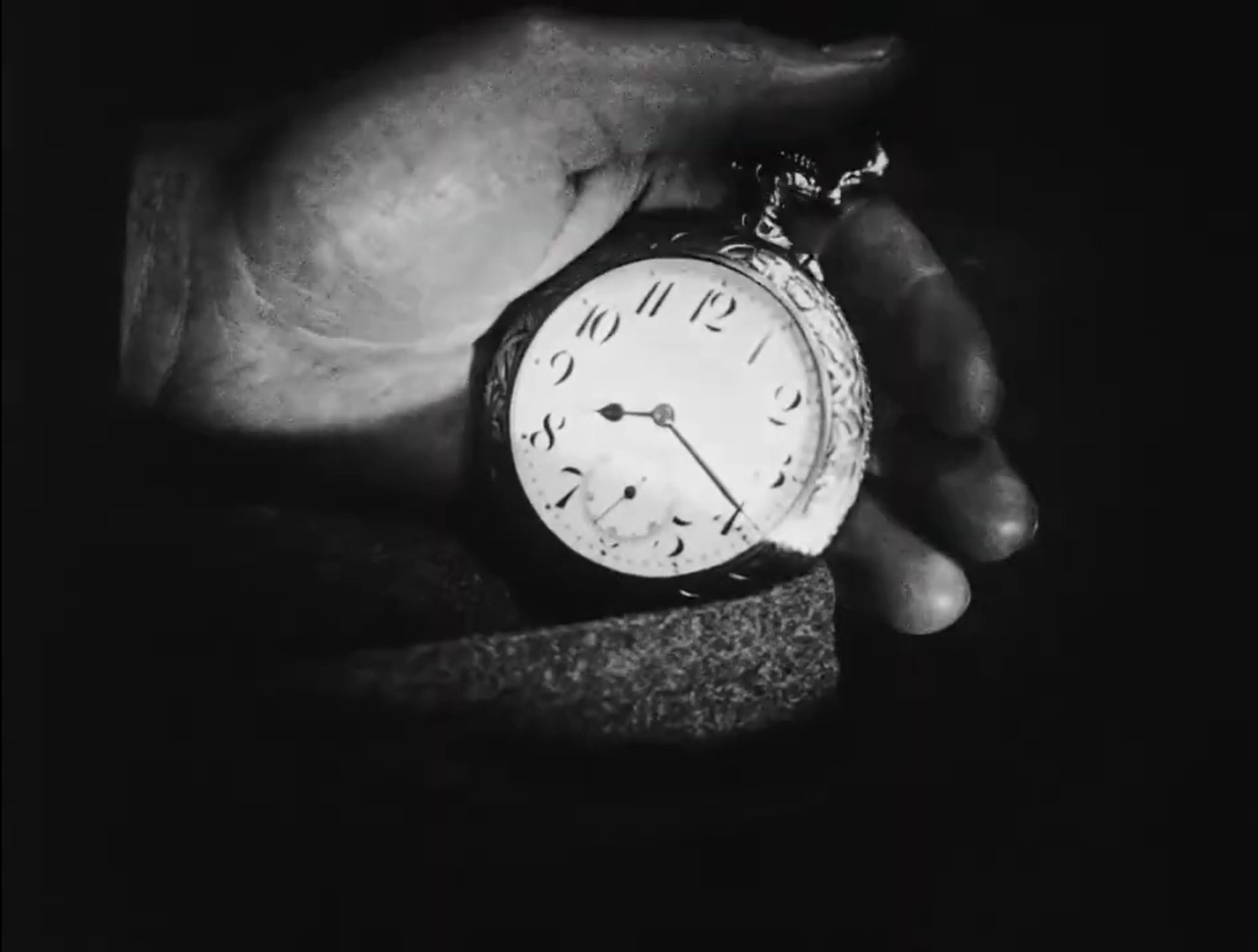
The opening of Mabuse ups the ante and is among the very best sequences of Lang’s career. After a couple of obligatory establishing shots, we are treated to a shot of Mabuse is staring at his pocket watch—then seen in close-up—before an opening iris takes us first in front of, and then into a train. In one compartment, two men sit across from each other, a leatherbound folder beside one of them. The briefcase is seen twice in close-up, with the second leading to an in-camera dissolve revealing document inside. Already, then, we understand that Mabuse is masterminding a plot and that the folder is important—again, Lang’s camera is revealing rather than concealing. We return to the master shot of the compartment, where one of the men checks his own watch—8:19—and we cut to another man standing next to a car checking his own watch—now it’s 8:20. He gets into his car and Lang returns to Mabuse, still staring at his pocket watch as he reaches for a phone. Back in the compartment, the man across from the briefcase checks his watch yet again, and, seeing that it is now 8:22, he jumps up suddenly and strangles the man across from him. We cut back to the car driving along an embankment, then to another shot of it crossing underneath a bridge just as the train goes over it. In a shot from outside the train window, the man on the inside leans out and throws the briefcase overboard, and in the next shot it lands in the back of the car. Inside the car, the man blows a horn, which alerts yet another, seen in the next shot perched atop a telephone pole, to connect wires. We cut back to Mabuse yet again, watch in hand, reaching for a phone to converse with the man atop the pole, who is speaking directly into the wires.
This is about 5 minutes of the film, and over the next 17 we continue to see Lang masterfully put together an urgent but clear sequence demonstrating the plot. We watch, for example, as a car crash threatens to muck up Mabuse’s timing8, and then we finally learn his plan: play over the speakers an announcement of the briefcase’s stolen trade agreement, causing certain stock prices to fall; buy the stocks at a discount; ensure the agreement’s safe rediscovery half an hour later to bring the prices back up; sell back the just-acquired stocks at a huge profit. We also see Mabuse’s counterfeiting operation9 and get a look into the slums of the unnamed German city. There is even a moment where Mabuse berates a lackey for tardiness, as if to underline the careful calculation of the grand plan.
For Gunning, this sequence highlights Mabuse’s mastery over the clockwork scheduling and technologies we associate with modernity.10 To that, we might add that the crowd shots, the symmetry of some of the shots, and the winding, Expressionistic verticality of the slums anticipate Metropolis. But the opening of Mabuse, with its extensive cross-cutting and its use of inserts and close-ups to convey the narrative, also marks a clean separation from Feuillade, whose films often seem to be flying off the rails only to reengage us once again with the spectacular. The characters of Judex or Les Vampires are not lacking in polished conspiracies, but Feuillade’s narrative genius is in his ability to paint his characters into and out of corners. Mabuse’s precision, by contrast, finds a mirror in Lang’s own, the former calculating down to the second and Lang down to the shot exactly what the grand narrative requires.
It’s in Mabuse, then, that we see Lang come into his own both formally and thematically. While he still borrows from the narrative structure of detective series, his embrace of more complex narratives gives way to new formal and ideological expressions. His cross-cutting allows him a narrative tension his more straightforward narratives lack, a chance to tell more complex stories about modernity, and the ability to draw analogies between his own mastery of the medium and his villains’ mastery of modernity, a tendency that would eventually find its richest pronunciation in Spies.
See, for example, Lucy Sante on Criterion’s site or Kino Lorber’s Blu-ray notes.
See Kino Lorber’s Blu-ray.
I pulled all these quotes from Wikipedia, but they all have citations there.
But that’s an aside to elaborate on some other week.
This criminality would be immortalized at the end of the decade by Alfred Döblin in Berlin Alexanderplatz and depicted with remarkable acuity two years after that in Erich Kastner’s Fabian: The Story of a Moralist, but Lang’s attentiveness to Weimar criminality would lead Gerald Feldman to dedicate quite a lot of space to the film in his 1993 study The Great Disorder: Politics, Economics, and Society in the German Inflation, 1914-1924.
Gunning writes eloquently on the cinematographic virtues of Part 2, and perhaps Kehr was attentive to the same virtues, but my inclination is to credit a lot of this to ace DP and clsoe Murnau collaborator Karl Freund given how much better Spiders looks than Four Around a Woman and even Destiny, neither lensed by Freund, after it.
The eponymous gang in Les Vampires goes through many leaders in just a few episodes because an actor was called from production in order to fight in World War I.
Lang’s characters tend to face their adversaries primarily in the form of timed missions, including the attempted snare on Mabuse at the end of Part 1, the elaborate robbery that serves as the inciting incident in Woman in the Moon, and the climaxes of both Spies and Four Around a Woman.
Run by blind men so they cannot identify Mabuse, belying the inversion in M.
It is worth noting here that Lang’s Mabuse is antithetical to the one in Norbert Jacques’s novel, who dreams of escaping modernity and returning to Edenic paradises in faraway lands.
The distinction between Lang's revealing camera and Feuillade's concealing one is such a sharp observation. That opening Mabuse sequence is basically Lang showing off how a director can control viewer information through editing rhythms, and the parallel to Mabuse's own control over technology and time is kinda perfect. I've always thought those repeated insert shots felt awkward, but framing them as early attempts to seperate message from medium makes way more sense than just calling it clumsy. Really digging this read of communication as the through-line across his work.